
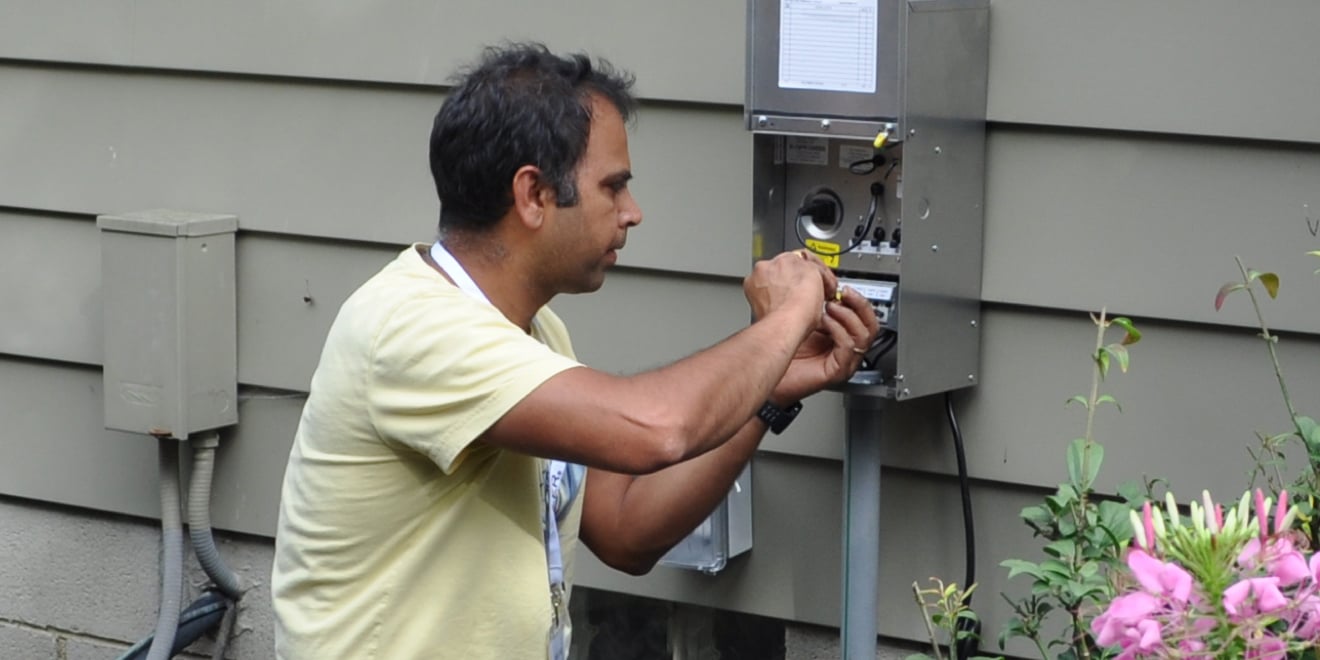
Selecting, sizing and organizing your electrical components can be the most intimidating part of a low-voltage installation, but if you spend some time planning in advance you should be able to look forward to a problem-free installation.
BASIC ELECTRICAL PLANNING –
THREE IMPORTANT FOCUS AREAS
1. transformer
2. Wire
It is important to select a wire gauge that is compatible with your transformer. You want to select one with an ampacity rating that is the same as or lower than the breaker. For example, a Kichler® 300W transformer has a 25-amp breaker, and 12-gauge wire is rated for 25 amps, so these are a good match. A smaller-gauge trunk line would not provide enough resistance to trip the breaker. Paired with a 25-amp breaker, the smaller-gauge line produces a risk of electrical damage if there is a direct short in the line because the breaker may not trip.
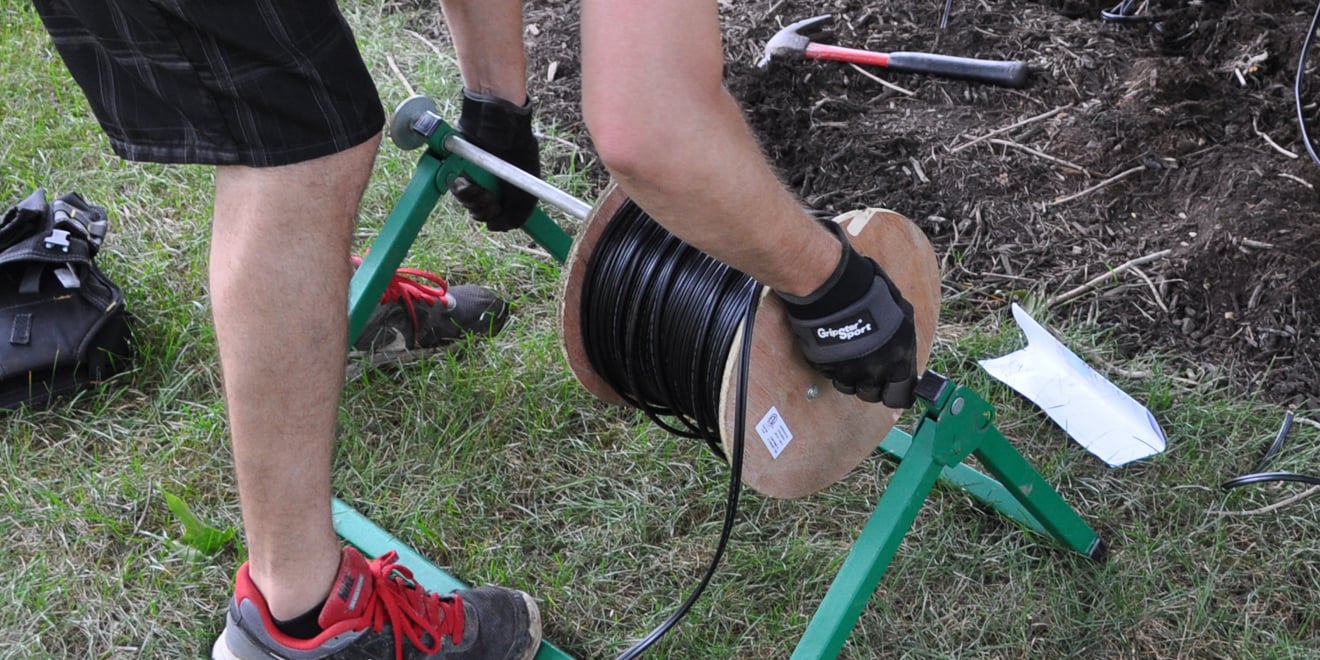
Each line must be buried at least 6 inches per NEC code, and it’s recommended that it be secured with a landscape staple every 6-10 feet to prevent pressure on the connections (i.e., if the wire tries to move or heave due to freezing or thawing). Leave a few feet of 12-gauge wire coiled near the base of each fixture for maintenance or to allow for relocating the fixture in the future if necessary.
3. Runs
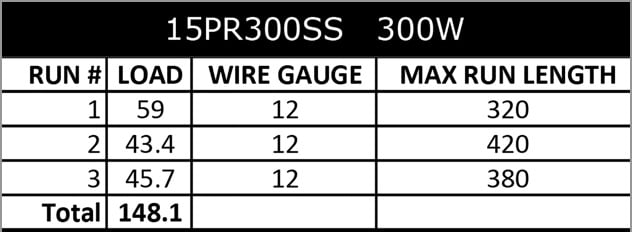
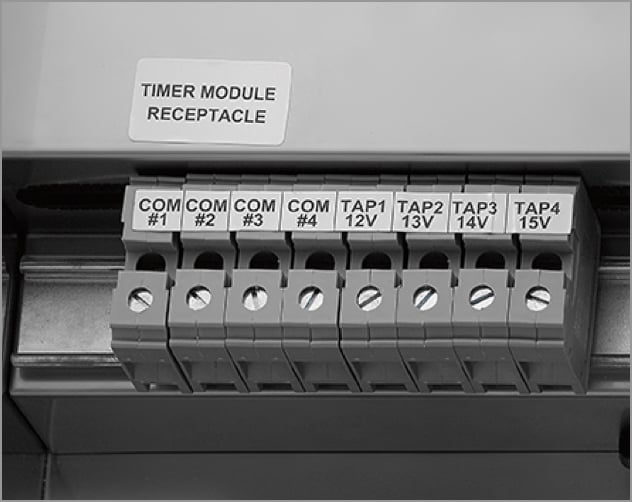
Kichler® LED landscape lights require 9-15 volts, so your runs should be organized so each fixture is getting voltage in this range. A typical line might run 150-200 feet with a fixture count of 40-65 VA. As you add more fixtures and extend the line, your voltage will drop. If you extend your 12-gauge line beyond 300-400 feet, you may run into problems. You can use a voltage meter during installation to see how the voltage is holding up. If the voltage is insufficient, the fixture may blink or not light at all. For longer runs, use the 15V tap in the transformer. For locations closer to the transformer, use the 12V tap.
If you are undertaking a big job and using a transformer larger than 300W, keep in mind that for each common port (labeled “C”), you can draw 240VA. As you approach that limit, you need to tap the second common port.

Tap into special services and earn rewards and a trip through LightPro™ Rewards.

Variable Lumen Output (VLO) - new technology that allows you to adjust light output in the field.

TECHNICAL SUPPORT, INCLUDING FREE LAYOUTS
We hope the guidance in this article was helpful to you. If you run into questions or problems pertaining to electrical issues or anything else, remember that Kichler Lighting’s Advanced Product Solutions & Layout Team (APS) is available to help. No problem is too basic or complex.
Call 844-KICHLER (844-542-4537) between 8:00 a.m. to 6:30 p.m. ET, Monday-Friday. APS is also available to develop free layouts for you.

WANT TO LEARN MORE?
Kichler Lighting provides two-day training courses that cover, among other topics, the electrical aspects of landscape lighting. These courses are offered at very affordable rates.
Check our website for dates or reach out to your Kichler Lighting sales rep. Contact us at lightpro@kichler.com to get connected.
Tap into special services and earn rewards and a trip through LightPro™ Rewards.
Variable Lumen Output (VLO) - new technology that allows you to adjust light output in the field.
©2019 Kichler Lighting LLC. All Rights Reserved

CONTINUE READING THIS ARTICLE
Receive other articles and emails through Kichler Lighting’s LightPro™ Rewards program.
By submitting this form, you are opting to receive emails from Kichler Lighting.
See privacy policy.